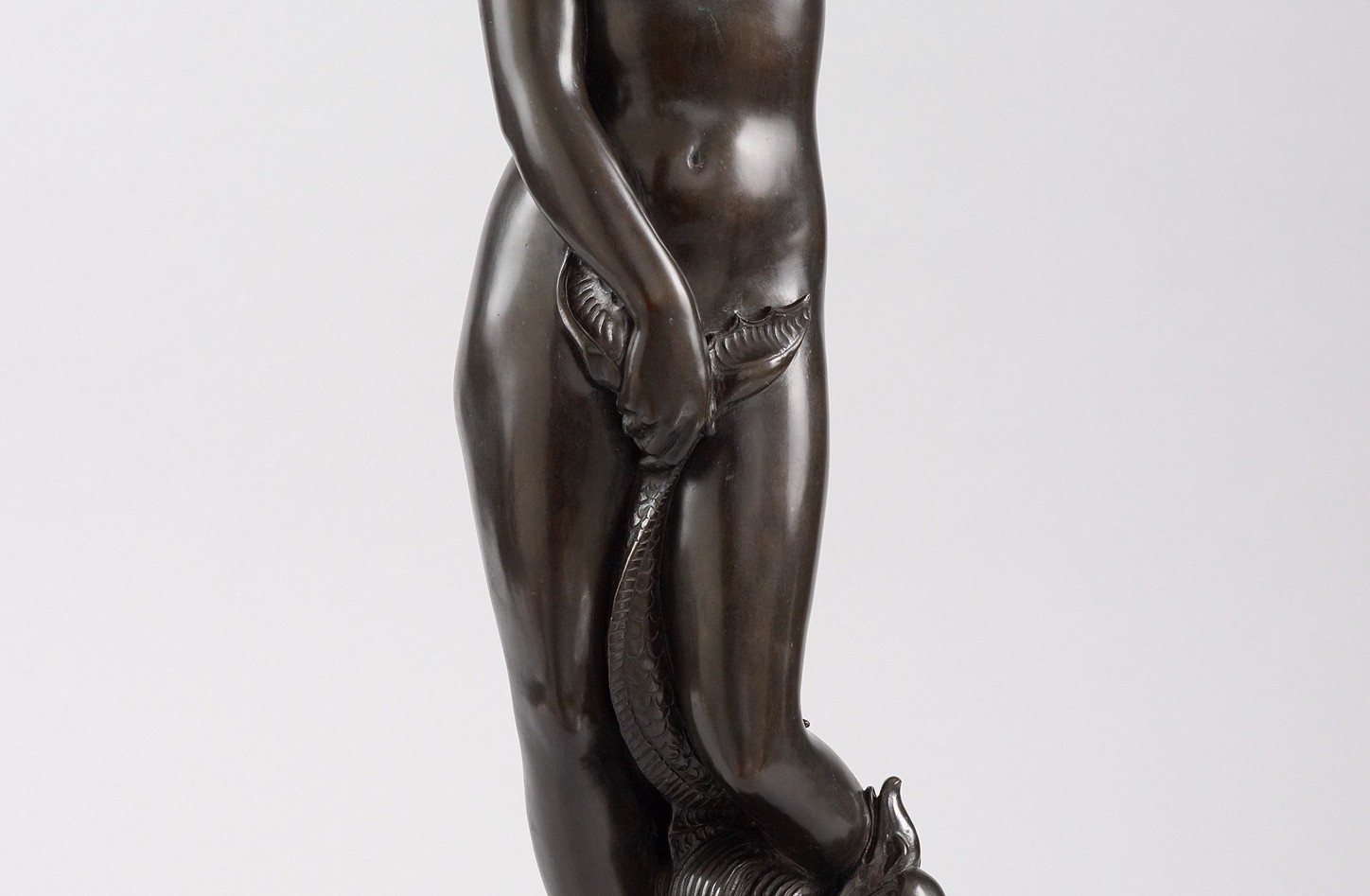
“The Bather” by Antonio Maraini
Classicism and Modernity in Italian Sculpture.
The elegant bronze female figure presented here depicts a Bagnante (Bather) and is an important work by the sculptor Antonio Maraini (Rome, 1886 – Florence, 1963), one of the leading figures of the Italian artistic scene in the first half of the 20th century.
Maraini was in fact not only a sculptor, but also an art critic, journalist, and a great promoter of Italy’s cultural life between the two world wars, holding a prominent role throughout his career within the Venice International Art Biennale, of which he served as general secretary for some fifteen years, from 1927 to 1942.
It is within this context that the creation of this Bagnante takes place, expressly conceived to be exhibited at the 16th Venice International Art Exhibition in 1928, as a representative and principal work of the artist, in Room 33 of the Exhibition’s Central Pavilion.
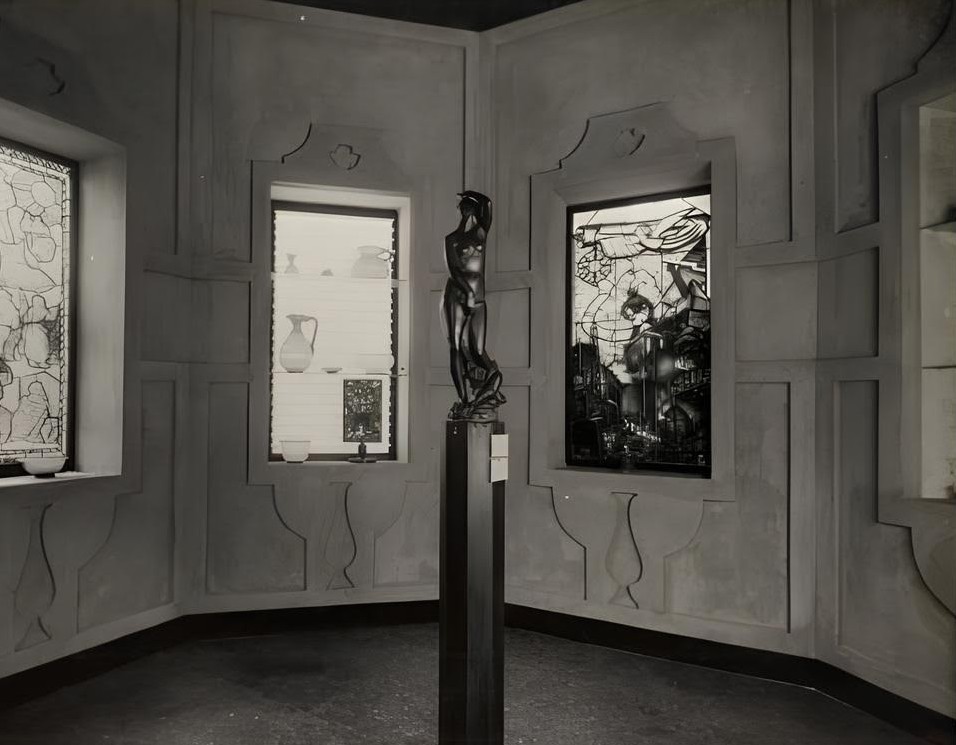
XVIth Venice International Art Exhibition (1928). Central Pavillion, Main Hall No. 33. Photo archive of the A.S.A.C. of the Biennale (No. 442)
At that year’s Venetian Biennale, Room 33 was an octagonal space carefully designed by Gio Ponti, featuring three large stained-glass windows created by Pietro Chiesa Junior—based on designs by Chiesa himself, Tommaso Buzzi, and Achille Funi—alongside blown glasses and Maraini’s bronze. The luminosity and spatiality of the room were designed to highlight the Bagnante, which was placed at the center of the octagon on an octagonal column, becoming the visual focal point of the room itself.
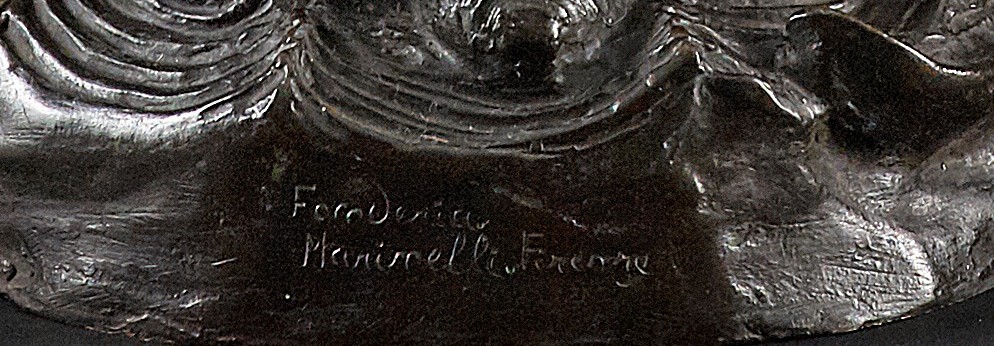
Among Maraini’s rare domestic-scale bronze works, compared to his more famous and celebrated public and monumental creations, this very beautifull bronze sculpture is a unique piece that stands out both for its high formal quality and the refinement of its casting, executed by the Fonderia Artistica Marinelli, a historic Florentine establishment among the most important in the panorama of Italian artistic foundies in the early 20th century, as evidenced by the inscription at the base of the sculpture.
The work depicts a nude female figure, characterized by an elegant twist of the torso and a sinuous movement of the body. The left arm is raised, concealing the tilted head, while the right arm descends softly along the torso, covering the nudity. The weight distribution of the body creates a soft, dynamic, and balanced pose. At her feet, a marine composition unfolds, articulated in three dolphin figures intertwining with the sea waves, with each other, and the bather’s leg.
From a formal poin of view, the Bagnante offers a significant synthesis of Maraini’s plastic research, resulting from the encounter between the revival of classical tradition and an evident 20th-century sensibility. If the body of the figure recalls the canons of ancient and Renaissance statuary, emphasizing the formal balance, composure, and elegance of the female nude, the face instead introduces a more intimate and contemporary dimension.
To find even more precise points of comparison, the sculpture’s silhouette clearly recalls the formal elegance and movement of some famous late 16th-century Florentine bronzes, such as Stoldo Lorenzi’s Galatea, where the refinement of the line and the sinuosity of the moving figure find an exact correspondence in Maraini’s work.
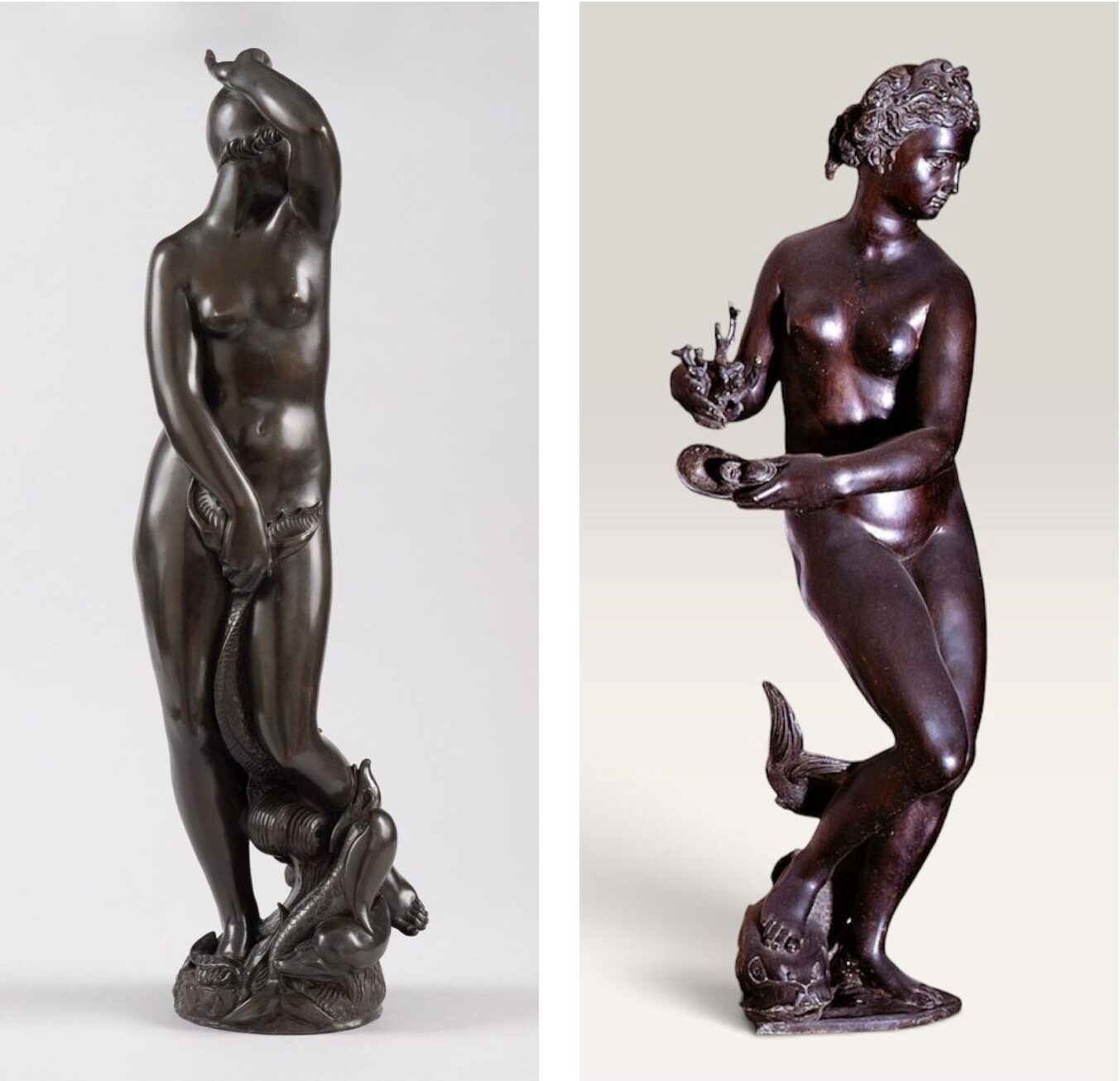
On the left, Bagnante by Antonio Maraini; on the right, Galatea by Stoldo Lorenzi.
On the other hand, the head of the Bagnante, characterized by a hairstyle and a cap typical of the aesthetic straddling Art Nouveau and Art Deco, testifies to the artist’s international taste, while also recalling—rather surprisingly—the facial features of Yoï Crosse, Maraini’s model and wife, who almost certainly inspired the artist in the design of this sculpture.
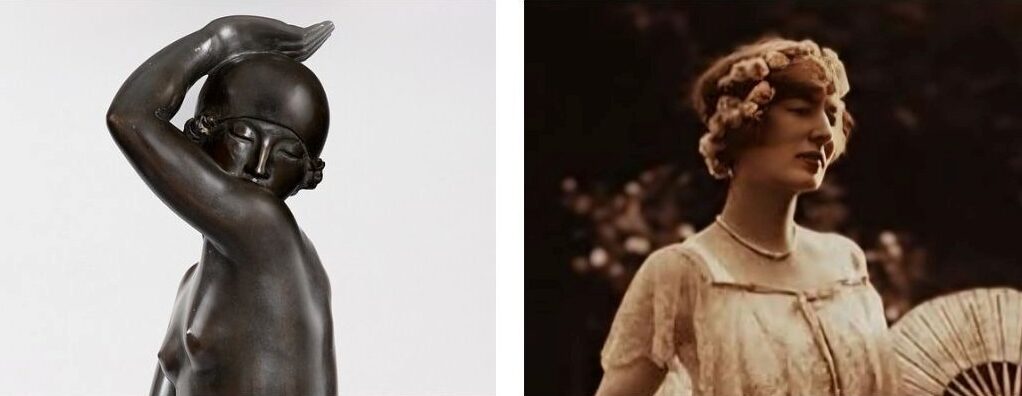
A comparison between La Bagnante (left) and a photograph of his wife, Yoï Crosse (right).
With this Bagnante, therefore, Maraini reinterprets classicism as a living language capable of crossing the centuries and engaging in dialogue with modern sensibility. Combining the idealization of the body inherited from the classical tradition with the expressive concreteness of the modern portrait, this sculpture can be said to be a perfect synthesis of formal rigor, harmony of proportions, and the individuality of the subject, thus representing one of the most interesting interpretations of the relationship between tradition and modernity in 20th-century Italian sculpture.
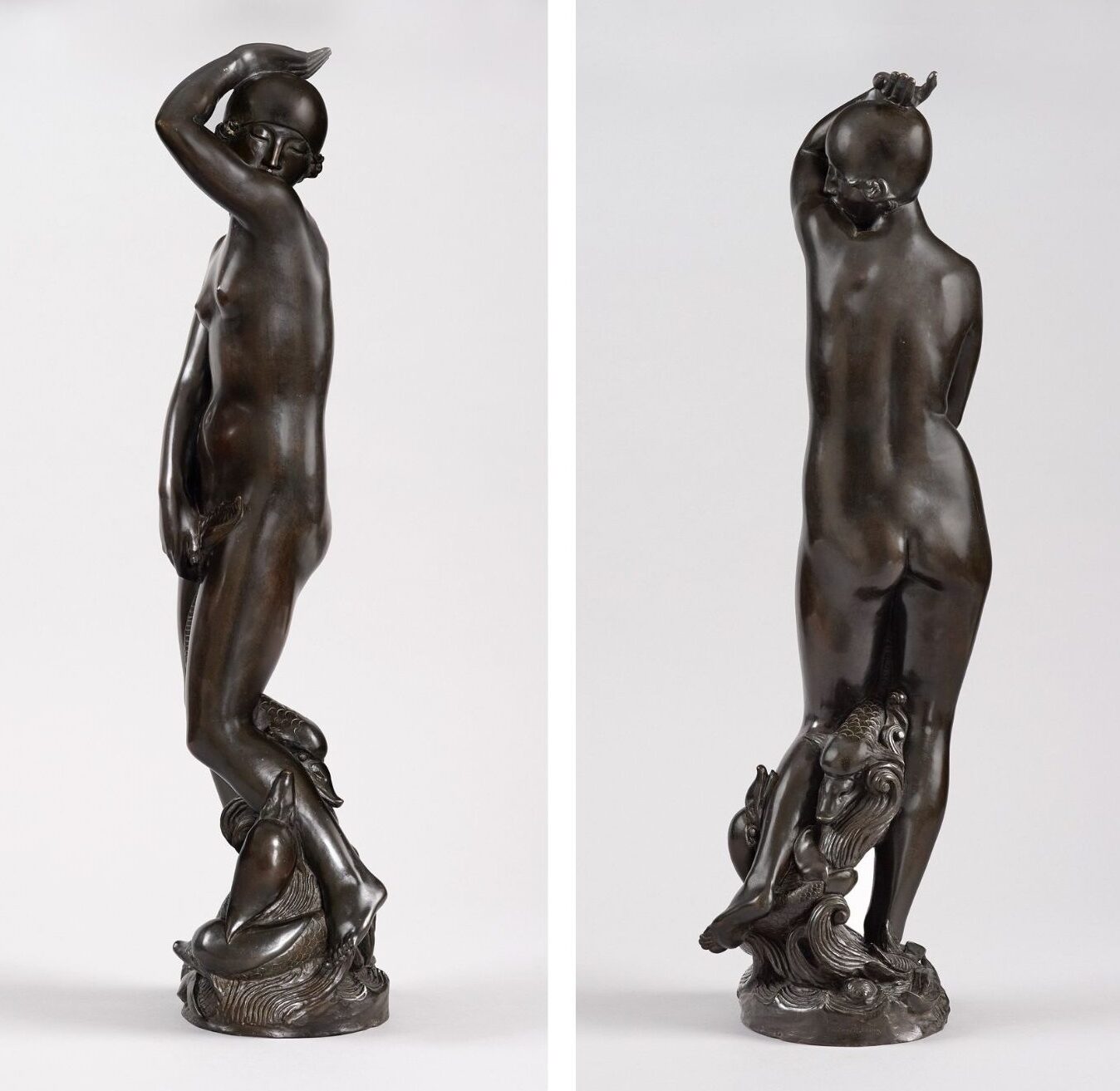
Antonio Maraini (Rome, 1886 – Florence 1963)
BAGNANTE
Bronze
1928
Cm 74h
Cast by Fonderia Marinelli
Inscribed “Fonderia Marinelli Firenze”
Exhibited at Venice Biennale in 1928
Bibliography: La Biennale, Catalogo Ufficiale illustrato, Venezia, 1928, p.42, tav. 13.
© 2014 – 2026 cesatiecesati.com | Please do not reproduce without our expressed written consent
Alessandro Cesati, Via San Giovanni sul Muro, 3 – 20121 Milano – P.IVA: IT06833070151